Creating a Safe Home for DM Dogs: Harnesses & Wheelchairs
Modifying your home minimizes sudden falls, curtails anxiety, and saves your GSD’s precious energy for rehabilitation instead of constant balance corrections. As coordination sways, slippery floors become treacherous hazards. Simple, low-cost modifications safeguard your dog's dignity and security.
Environmental Modification Checklist
- Traction Mapping: Lay non-slip yoga mats, rubber runner carpets, or interlocking foam gym tiles along your GSD's primary pathways (from resting bed to water bowl and outdoor relief doors).
- Paw Shielding: Keep toenails short to minimize dragging scuffs. Utilize rubber toe grips, specialized bands, or breathable boots to prevent bleeding, dragging wounds, and secondary infections.
- Weight & Nutrition: Extra weight puts critical strain on failing muscles. Maintain a lean target body condition. Feed high-quality, highly digestible proteins to support muscle mass, avoiding protein-restrictive "senior diets" that starve lean tissue.
- Incontinence & Sanitation: Schedule frequent, regular outdoor breaks. Bathe GSD hindquarters daily to avoid urine scald. Monitor closely for Urinary Tract Infections (UTIs), noting cloudy, foul-smelling, or pinkish/red urine immediately.
- Structural Access: Provide structural ramps for vehicles or stairs. Raise food and water bowls to support neck alignments. Invest in an orthopedic mattress to stave off rapid pressure sores on elbows and hips.
Standard front-clip or chest-pull walking harnesses are dangerous for dogs with DM. Pulling up on them puts harmful pressure on the spine and abdominal organs. A dedicated rear-lifting harness with pelvic support is essential.
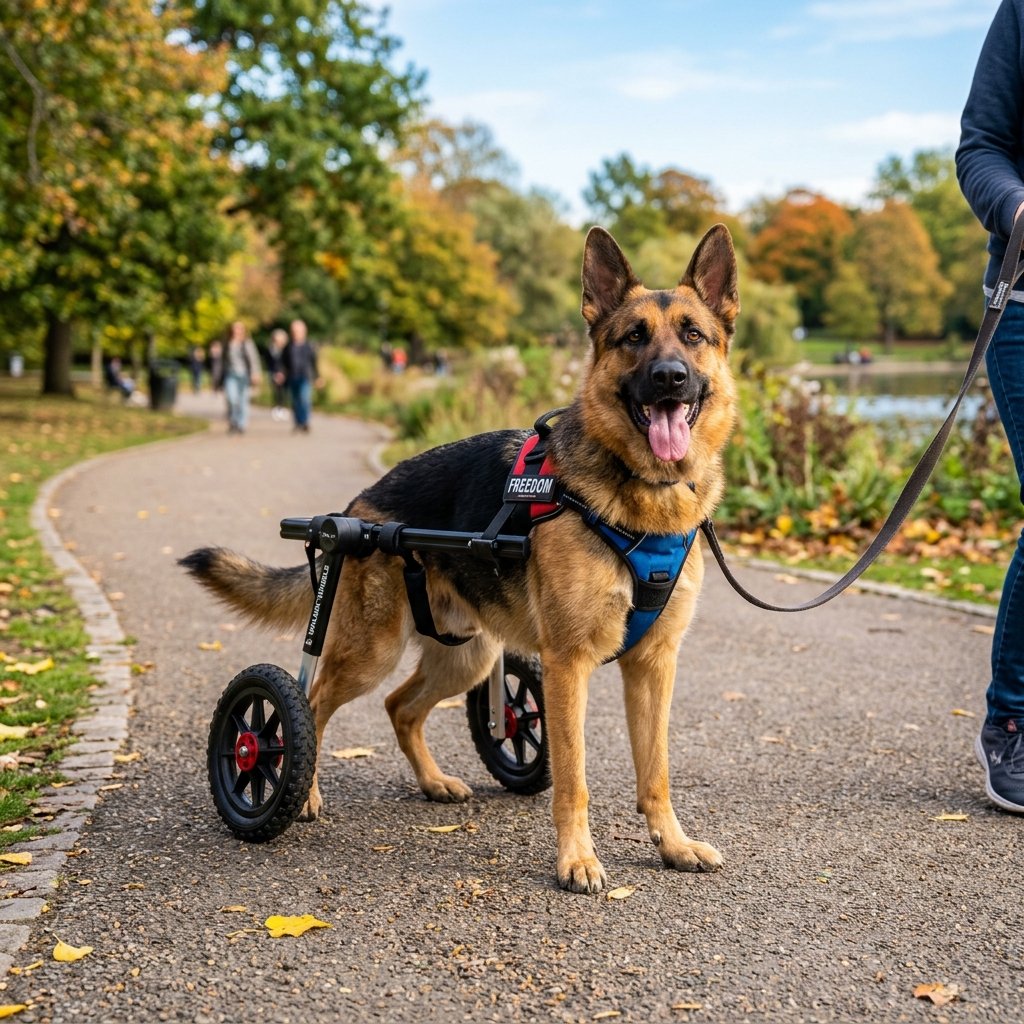
Phased Mobility Gear Integration
Rather than introducing complex gear immediately, implement a staged approach that matches your dog's progression timeline:
Interactive Mobility Gear Selector
Click on a disease stage below to identify the recommended mobility gear, its primary function, and critical selection guidelines:
Stage 1: Early Weakness Support
When your GSD starts scuffing toes or slipping on smooth floors, introduce a full-body lifting harness (such as the Help 'Em Up® Harness). It utilizes a specialized support point under the sternum and pelvis to distribute load correctly.
🛑 Warning: Avoid standard neck-pull or front-clip chest harnesses; they put harmful pressure on the spine and chest muscles, exacerbating hind weakness.
Adjustable vs. Custom-Built Carts
When selecting a dog wheelchair, prioritize a fully adjustable model over a custom-built, fixed-frame cart. Because Degenerative Myelopathy is a progressive disease, your GSD's muscle mass and body weight will continuously shift. An adjustable cart allows you to recalibrate the height, length, and width to maintain correct spinal alignment as muscle wasting occurs. Furthermore, high-quality adjustable rear carts can later be converted into full-support 4-wheel (quad) carts by attaching front extension frames, saving significant financial costs as the disease advances to the front legs.