Canine DM Exercises: Physical Therapy Programs That Work
Though Degenerative Myelopathy (DM) lacks a cure, rigorous clinical evidence proves that exercise therapy functions as a powerful counterforce against neurogenic muscle atrophy. A landmark study by Kathmann et al. (2006) revealed that dogs receiving intensive physiotherapy remained ambulatory for a median of 255 days, compared to a bleak median of 55 days for those without a routine. That is a 4.6-fold increase in quality functional life achieved entirely through consistent, moderate care.
The Rationale Behind Rehabilitation
Consistent, low-intensity exercise preserves proprioception (the body's awareness of where its limbs are in space) by challenging neural pathways, increases circulation to clear waste, and prevents joint contractures. More importantly, maintaining mobility and activity yields substantial mental health benefits, preventing the frustration and depression common in confined, active breeds like German Shepherds.
If your dog shows signs of exhaustion, stumbling, or distress, stop immediately. Exercise should be consistent and low-intensity, never pushing to the point of structural collapse or pain.
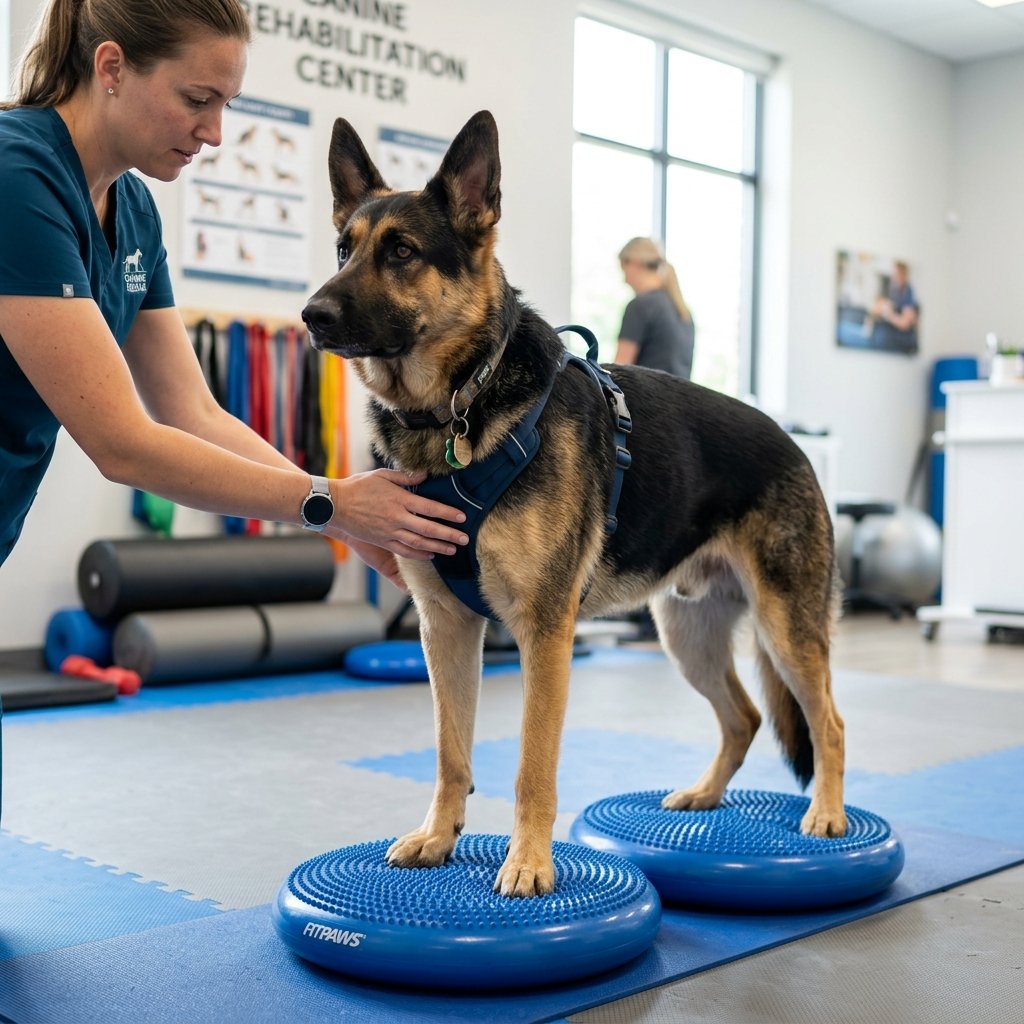
The Daily 3-Phase Home Routine
Collaborate early with a Certified Canine Rehabilitation Practitioner (CCRP) to tailor these three daily phases to your dog's stage:
Interactive Exercise Tracker & Timer
Select the current rehab phase to see the checklist, check completed items, and use the integrated session timer:
Phase 1: Circulatory Activation (20–25 Mins)
- Gentle muscle massage to stimulate blood flow.
- Passive Range of Motion (PROM) stretching (hips, knees, ankles) while relaxed on side.
- Short, assisted walk utilizing a rear harness or custom cart.
Phase 2: Balance & Proprioception (10–15 Mins)
- Guided Sit-to-Stands on a non-slip surface (builds hind/core strength).
- Weight Shifting (gentle side-to-side hip nudges to force correction).
- Cavaletti Rails (walking slowly over low, spaced rails or noodles).
- Puzzle toys/nose games for mental enrichment.
Phase 3: Cool Down & Contracture Prevention (10–15 Mins)
- Final short, assisted walk on stable traction surfaces.
- Gentle PROM stretching session to prevent muscle tightness.
- Soothing massage for relaxation.
Hydrotherapy: The Gold Standard
If accessible, water-based exercise is one of the most beneficial forms of therapy for a dog with DM. Water provides buoyancy, which reduces the force of gravity and supports the dog's body weight, making movement easier and reducing the risk of falls. At the same time, the resistance of the water provides an excellent workout for the muscles, helping to maintain strength and mass. Underwater treadmills are ideal, as they allow for controlled, assisted walking in a safe environment. Swimming is another option, though it requires a properly fitted life vest for safety. Sessions with a professional hydrotherapist typically cost between $40 and $80 or more, but the benefits for maintaining muscle tone and cardiovascular health are significant.