German Shepherd Degenerative Myelopathy: Early Signs & Diagnosis
Degenerative Myelopathy (DM) causes a slow, painless deterioration of the spinal cord's white matter, specifically interrupting nerve fiber signals from the brain to the hind limbs. Commonly referred to as the canine equivalent of human ALS (Lou Gehrig's disease), this condition typically impacts older dogs aged six or older, with German Shepherds being the most highly represented breed.
The Genetic Reality Check
While a genetic defect in the Superoxide Dismutase 1 (SOD1) gene is heavily linked to the disease, a positive DNA test (such as the OFA A/A genotype, found in 18% to 20% of GSDs) does not mean your dog is doomed. Due to incomplete penetrance, many dogs carrying the mutation never develop clinical symptoms. Diagnosis is instead a methodical process of elimination, requiring veterinary neurological exams, advanced imaging (MRI/CT scans), and ruling out treatable issues like arthritis or IVDD.
A positive SOD1 genetic test indicates risk and susceptibility, not active clinical diagnosis. A diagnosis must be clinical—based on the symptoms the dog exhibits and advanced imaging that rules out structural spinal cord issues.
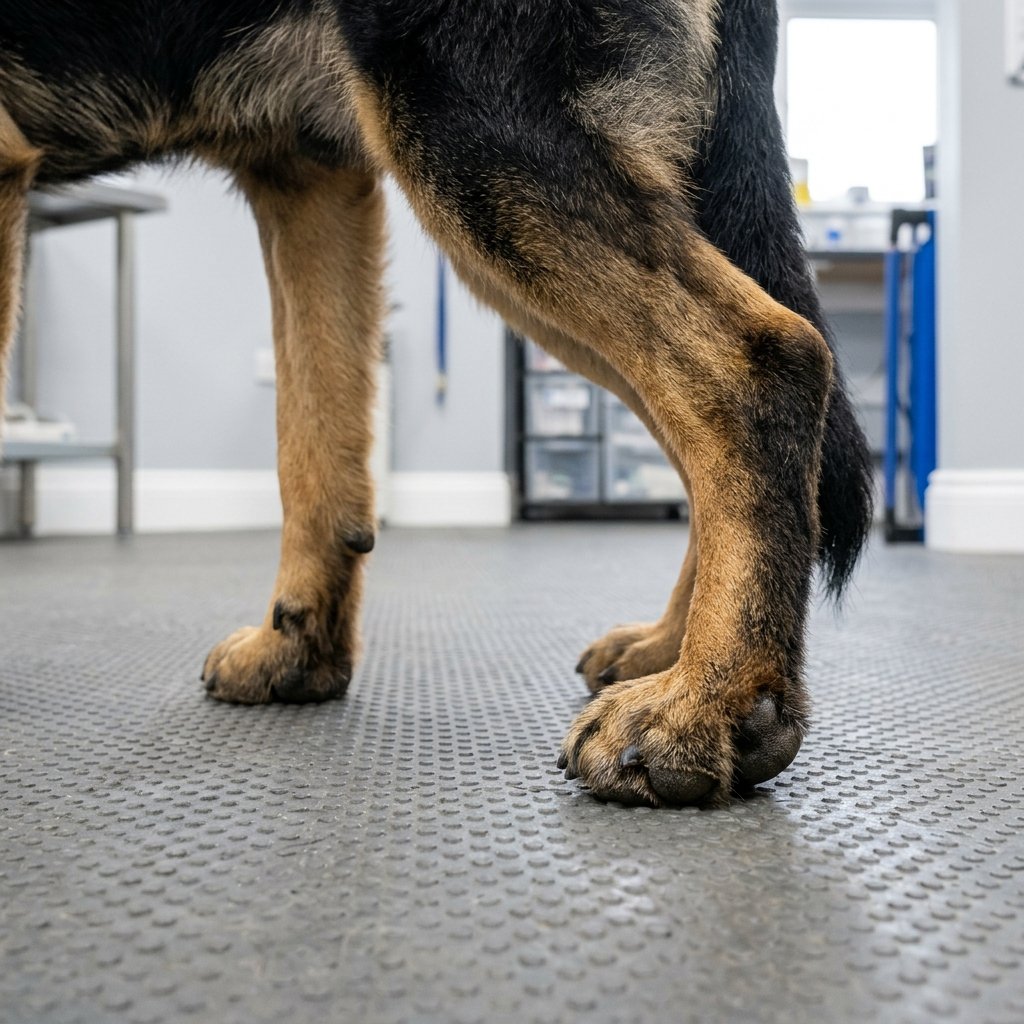
Early Warning Signs & Misdiagnosis Matrix
Because early symptoms are subtle, they are frequently confused with standard aging. Use this matrix to evaluate your German Shepherd's daily gait:
| Symptom | Clinical Description | Common Orthopedic Misdiagnosis |
|---|---|---|
| Toe Scuffing | Dragging hind toenails along the ground, causing uneven nail wear. | Normal walking wear or mild osteoarthritis. |
| Knuckling | Intermittent flipping of the foot, causing the dog to walk on top of the paw pad. | Joint instability or general aging clumsiness. |
| Unsteadiness | An uncoordinated, waddling gait that worsens noticeably with fatigue. | General weakness or age-related muscle decline. |
| Slipping on Floors | Losing traction completely on smooth surfaces like tile, wood, or linoleum. | Clumsiness or localized fear of floor texture. |
| Hind Leg Crossing | Crossing back legs over each other while turning to compensate for balance loss. | Poor body awareness or standard movement variations. |
| Difficulty Rising | Delayed or struggling attempts to stand up, occasionally scooting with front limbs. | Severe arthritis or decreased flexibility. |
Interactive Symptom Checklist
Select the signs you are currently observing in your GSD's movements to receive a structured assessment summary: