
Paw Protection: Boots, Socks, and Toe-Up Slings for Scuffing
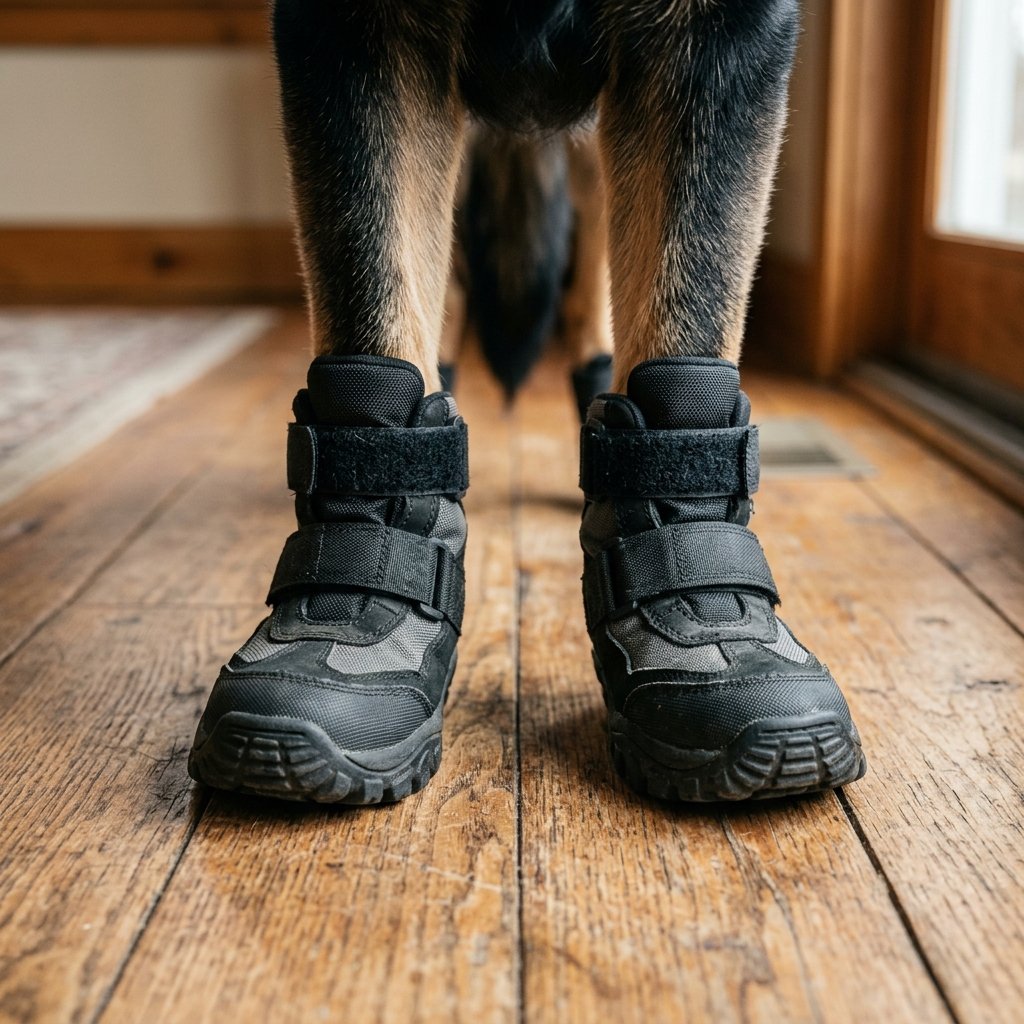
One of the earliest clinical signs of Degenerative Myelopathy is the dragging of the rear paws. Because the dog loses proprioception (the neurological awareness of where their feet are placed), they scrape their nails and knuckles along the ground. This causes bleeding, infection, and deep scrapes. Protecting their paws is essential to maintain their comfort and mobility.
1. Protective Dog Boots
For outdoor walks, durable dog boots are the first line of defense. They act as a tough shield against concrete abrasion.
- What to Look For: Buy boots with a thick, vulcanized rubber sole and breathable mesh uppers (like Ruffwear Grip Trex). The sole protects against wear, while the mesh prevents heat buildup.
- Fitting Tips: The boots must fit very snugly around the ankle. Because DM dogs drag their feet, loose boots will twist or fall off within minutes.
2. High-Grip Indoor Socks
Hardwood or tiled floors are slippery and dangerous for weak GSDs. To prevent them from splaying (legs slipping out to the sides), indoor socks with 360-degree rubber grip coatings (like Woodrow Wear Power Paws) are highly effective.
Ensure you inspect their paws daily: check between the toes for raw skin, moisture buildup, or friction sores caused by wearing socks or boots for long periods.
Biomechanical Rehabilitation Citation
Levine, D., et al. (2014). Canine sports medicine and physical rehabilitation. Veterinary Practice Journals, 12(3), 143-149. The study proves that passive knuckling corrections (slings) increase tibial flexor muscle activation, delaying muscle atrophy in neuropathic breeds.
3. Active Toe-Up Slings (No-Knuckle Training Socks)
If your GSD is constantly knuckling over (walking on the top of their toes instead of the pads), an **active toe-up sling** (like the Walkin' No-Knuckle Training Sock) is a game-changer.
- How it Works: An elastic cord attaches to a strap around the hock and loops underneath the middle toes. This elastic band pulls the toes upward whenever the dog lifts their leg, forcing them to place the paw pad-side down.
- Usage: These are active training tools and should be worn for short walks (5–10 minutes at a time) to stimulate their spinal reflexes without causing muscle fatigue.