Mental Stimulation: Keeping Your GSD Happy When Mobility Fails
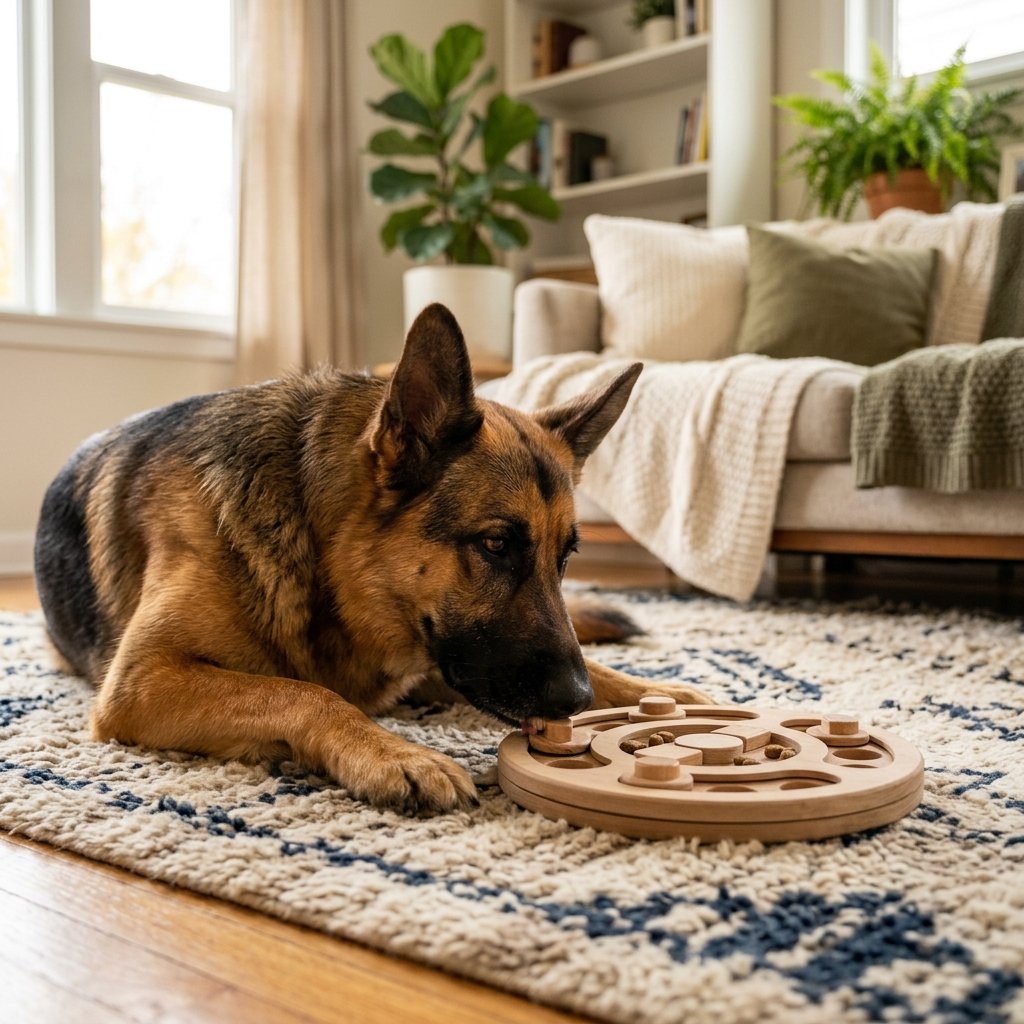
German Shepherds are highly intelligent, active working dogs. When Degenerative Myelopathy causes progressive hind limb weakness and eventual paralysis, the loss of physical freedom can lead to severe canine depression, anxiety, and lethargy. Studies show that cognitive engagement is vital for reducing cortisol (stress) and stimulating mental pathways in dogs with physical limitations.
1. Scent Training (Nose Work)
A dog’s sense of smell is their primary way of exploring the world. Nose work is an outstanding low-energy, highly stimulating game that works even if your GSD is lying down on their side or resting on a bolster bed.
- The Box Game: Lay out 3 or 4 empty cardboard boxes on the floor within reach of your dog. Hide a smelly treat (like freeze-dried liver or sardines) inside one box. Let your dog sniff each box and point or nudge the correct one to get the treat.
- Find the Scent: Rub a drop of diluted lavender or chamomile water on a toy and reward your dog whenever they look at or touch that toy. You can hide the toy under a towel nearby and let them sniff it out.
2. Interactive Feeders and Puzzle Toys
Meal times are a prime opportunity for cognitive challenge. Instead of feeding your GSD from a standard bowl, make them work for their food to simulate natural foraging behaviors.
- Snuffle Mats: A fabric mat with dense fleece strips. Hide kibble or dry treats deep within the folds. Your GSD can lie down comfortably and use their nose and front paws to forage.
- Wooden Slide Puzzles: Level 1 or Level 2 sliding board puzzles. The dog uses their nose to slide tiles aside, revealing hidden treat compartments.
- Stuffed Kongs: Stuff a rubber Kong toy with peanut butter, wet food, or pumpkin puree, and freeze it. This provides 30–45 minutes of licking therapy, which naturally releases endorphins and calms the nervous system.
Canine Cognitive Enrichment Study
Hall, N. J. (2018). Canine olfactory learning and cognitive stimulation. Journal of Veterinary Behavior, 23, 44-51. The research underlines that systematic scent identification exercises lower pulse rates and reduce anxiety markers in confined or mobility-restricted working dog breeds.
3. Sensory Excursions (The "Sniffari")
Even if your GSD cannot walk independently, it is crucial to get them outside the house to experience new environments. Sensory excursions help prevent isolation and provide vital environmental stimulation.
- Wheelchair Walks: If your GSD is fitted with a rear-wheel cart, take them to new parks, beach boardwalks, or pet-friendly stores. Let them pause and sniff new grass patches and trees.
- Wagon Rides: If your dog is in late-stage DM and cannot use a cart, lay them on a soft orthopedic bed inside a heavy-duty garden wagon or stroller. Pull them around a busy neighborhood or park to let them watch birds, hear sounds, and sniff the breeze.
4. Keeping a Positive Caregiver Attitude
German Shepherds are incredibly sensitive to their owner's emotions. If you are stressed, sad, or grieving, your dog will mirror those feelings. Engage in these brain games with an upbeat, encouraging voice. Celebrate every tiny success to show them they are still valued members of your family pack.