Hydrotherapy Guide: Safe Swimming & Water Therapy for Canine DM
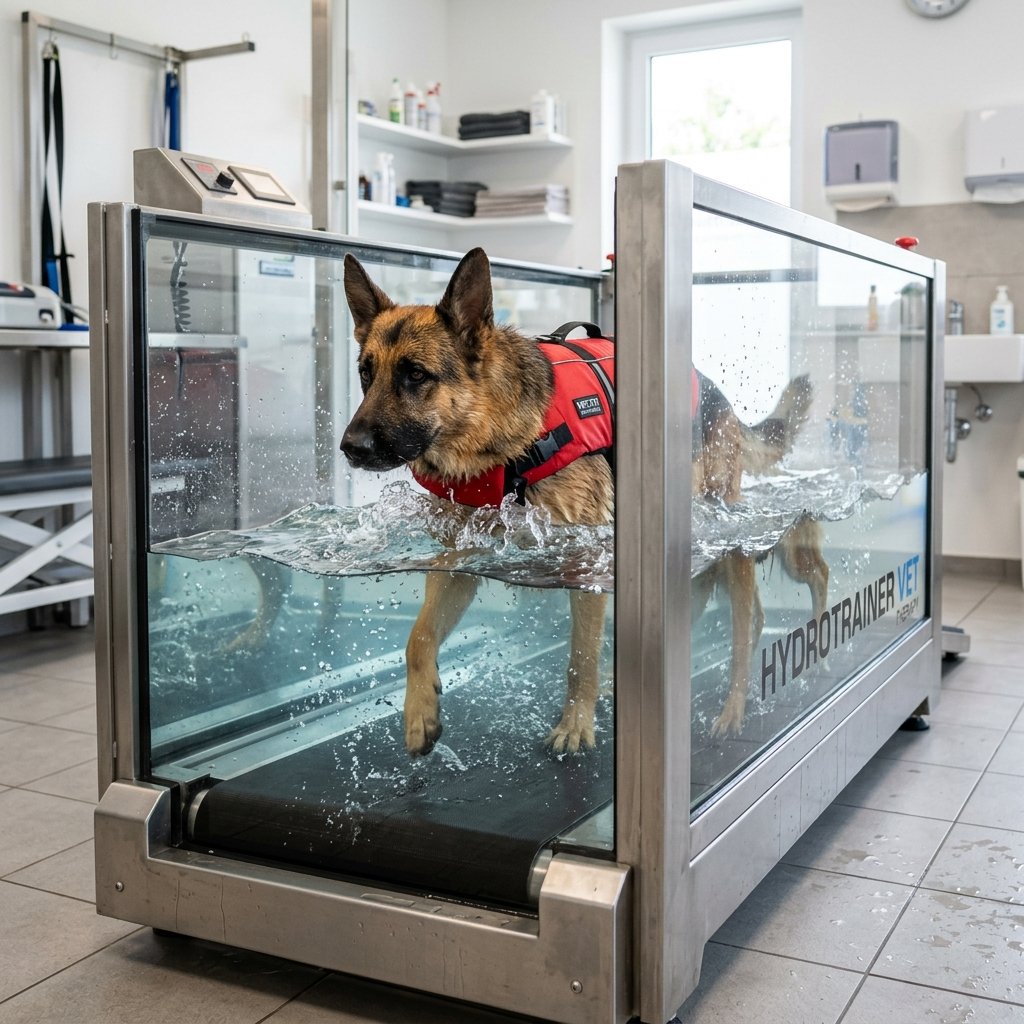
Physical therapy is the single most effective method to delay the symptoms of Degenerative Myelopathy. Among all rehab treatments, **hydrotherapy** (water-based exercise) is uniquely powerful. Water provides buoyancy, which supports your German Shepherd's body weight, reducing stress on weak joints while providing resistance to help maintain muscle bulk.
1. The Science of Buoyancy and Resistance
When a dog is submerged in water up to their hip level, their body weight is reduced by approximately 60%. This allows GSDs with severe hind limb weakness to stand, balance, and take steps that would be impossible on dry land.
Additionally, water is about 800 times denser than air. Moving legs through water requires more effort, providing gentle, active resistance that builds muscle strength and cardiovascular stamina without impacting spinal discs.
2. Underwater Treadmills vs. Pool Swimming
Both methods offer excellent benefits, but they serve different goals in a rehabilitation program:
- Underwater Treadmills (Preferred for Gait Training): These allow precise control over water height, speed, and incline. The therapist can manually assist the dog's legs, helping them repeat proper walking patterns. This stimulates "spinal walking" pathways in the nervous system.
- Pool Swimming (Preferred for Cardio & Range of Motion): Swimming encourages a full flexion and extension cycle of all four limbs. It is highly energetic, which is great for active dogs, but requires careful supervision to prevent fatigue and drowning.
Rehabilitation Clinical Reference
Kathmann, I., et al. (2006). Daily controlled physiotherapy increases survival time in German Shepherd dogs with degenerative myelopathy. Journal of Veterinary Internal Medicine, 20(5), 1085-1090. Controlled water therapy is documented as a primary factor in extending active, mobile life up to 250+ days compared to inactive cohorts.
3. Safety Guidelines for Hydrotherapy
Water therapy must always be structured and safe. Follow these critical guidelines:
- Use a Life Jacket: Even if your dog is an excellent swimmer, weakness in the hind legs will cause their rear to sink, throwing off their balance. Always fit them with a high-grip flotation vest.
- Control Water Temperature: Therapy water should be warm (78°F–85°F / 25°C–29°C) to relax stiff muscles and increase circulation. Cold water can cause muscles to contract, increasing stiffness.
- Prevent Water Ingestion: Paralyzed or weak dogs often open their mouths to breathe heavily while paddling, accidentally swallowing water. Keep their chin supported at all times.
4. Frequency and Duration
Start slowly. A typical initial session should last only 2 to 3 minutes of active walking or swimming, followed by a rest. Gradually build up to 15–20 minute sessions, twice a week. Watch for signs of heavy breathing, wide eyes, or red gums, which indicate fatigue.