Decoding the SOD1 DNA Test: What DNA Results Really Mean
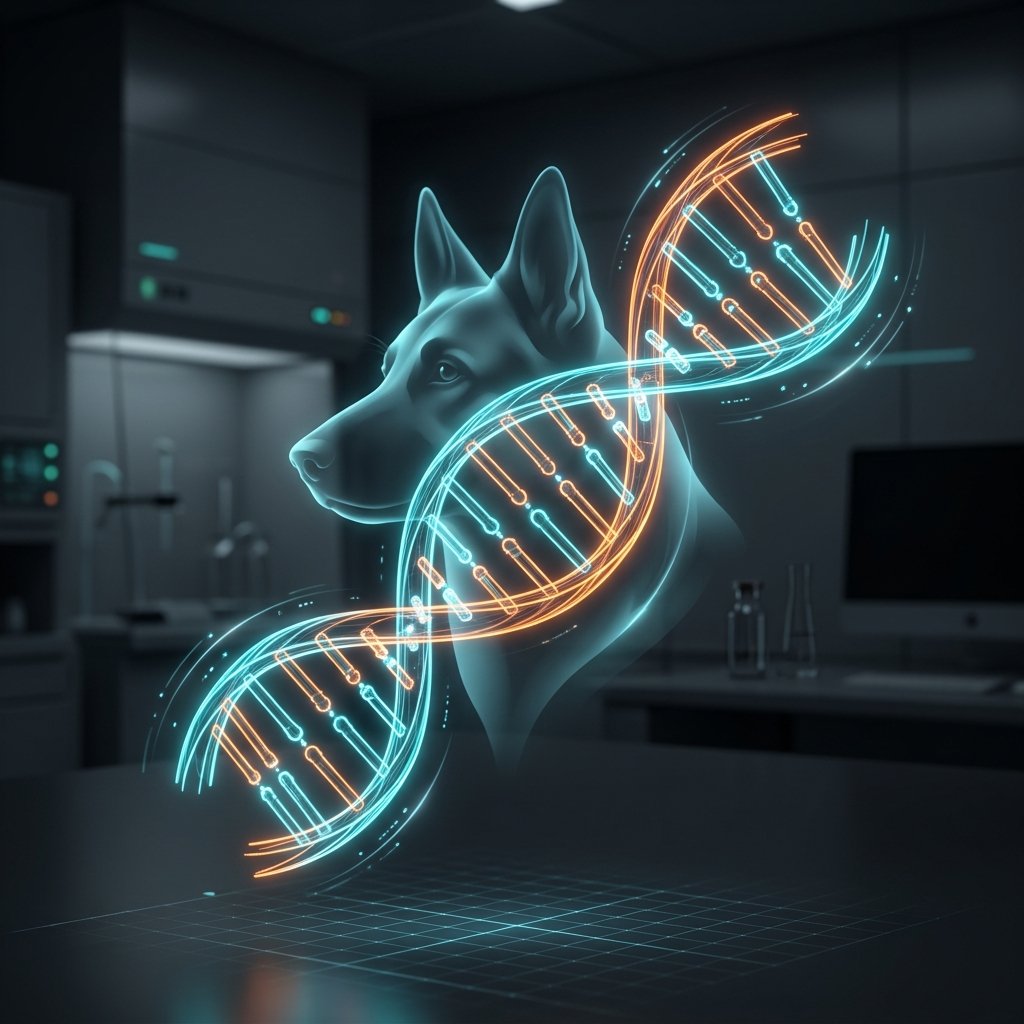
One of the most important breakthroughs in canine neurology was the discovery of a mutation in the superoxide dismutase 1 (SOD1) gene that is highly linked to canine Degenerative Myelopathy. For German Shepherd breeders and owners, testing for this mutation has become a standard diagnostic tool. However, interpreting genetic results can be confusing.
1. The SOD1 Mutation Explained
The SOD1 gene is responsible for producing an enzyme that neutralizes dangerous free radicals in cells. When a mutation occurs, the enzyme folds incorrectly, forming toxic aggregates (clumps) inside the motor neurons of the spinal cord. Over time, these aggregates cause the neurons to degenerate, interrupting signals between the brain and the legs.
2. Understanding the Three Test Results
The DNA test evaluates the alleles (copies) of the SOD1 gene. Every dog inherits one allele from their mother and one from their father. Results are classified into three categories:
- Normal / Clear (G/G): The dog has two normal copies of the SOD1 gene. They will not develop DM and cannot pass the mutation to their offspring.
- Carrier (G/A): The dog has one normal allele and one mutated allele. Carriers are highly unlikely to develop clinical DM, but they will pass the mutated allele to approximately 50% of their puppies.
- At-Risk / Homozygous Mutated (A/A): The dog has two copies of the mutated allele. They are genetic candidates for developing Degenerative Myelopathy later in life.
Clinical Genetics Citation
Awano, T., et al. (2009). Genome-wide association analysis reveals a SOD1 mutation in canine degenerative myelopathy that resembles amyotrophic lateral sclerosis. Proceedings of the National Academy of Sciences, 106(12), 4894-4899. This seminal paper established the links between SOD1-A/A genotypes and spinal cord pathology.
3. The Concept of Incomplete Penetrance
It is crucial to understand that an **"At-Risk" (A/A) result is not a medical guarantee of clinical diagnosis**. This is due to a genetic phenomenon called **incomplete penetrance**.
Some dogs with the A/A genotype live to be 14 or 15 years old without ever showing hind limb weakness. While they possess the genetic recipe for DM, environmental, dietary, or modifier gene factors prevent the disease from manifesting. However, an A/A result means they are highly vulnerable, and any signs of knuckling or swaying should be investigated by a veterinary neurologist.
4. What to Do with the Results?
If your GSD tests **At-Risk (A/A)**, do not panic. Instead, use this information to be proactive:
- Focus heavily on weight management (keep them lean).
- Implement a daily exercise routine (walking, swimming) to build a robust physical reserve before any symptoms develop.
- Submit the results to the Orthopedic Foundation for Animals (OFA) database to contribute to scientific research on breed health.