Choosing the Right Rear Wheel Cart: Sizing, Fitting, & Training
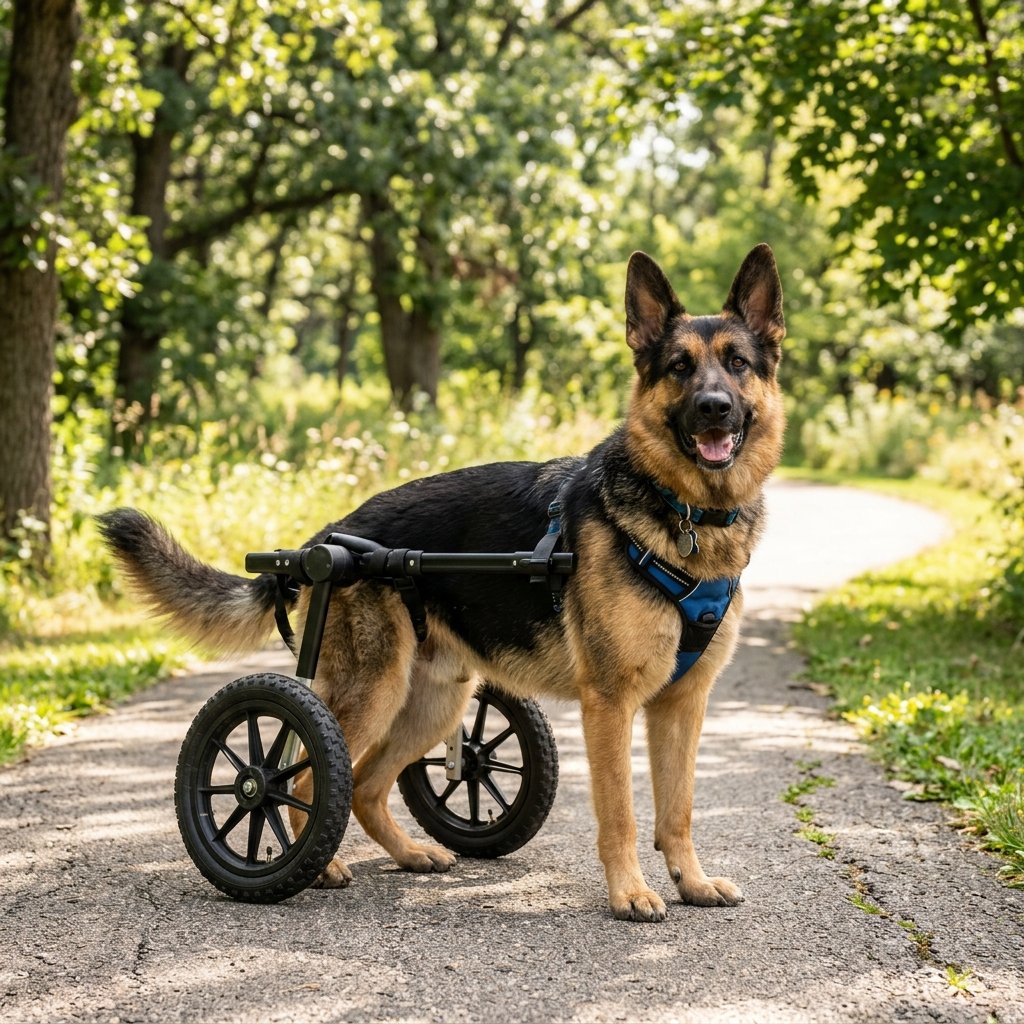
For a German Shepherd with Degenerative Myelopathy, a rear-support wheelchair (commonly called a cart) is not a sign of defeat. Instead, it is a tool of liberation. A wheelchair restores their ability to explore, run, and socialize, which significantly improves their mental health and cardiovascular fitness.
1. When is the Right Time to Get a Cart?
Many owners wait until their dog is completely paralyzed to buy a cart. This is a mistake. The best time to introduce a wheelchair is during the **early-to-mid stage of DM**, when the dog has noticeable hind limb weakness, crosses their rear paws, or starts knuckling, but can still stand and take weak steps.
Introducing the cart early allows the dog to learn how to steer and use the device while their front legs are still 100% strong. It also acts as an active physical therapy tool: their rear legs can still touch the ground and walk, but the cart takes the load off their hips.
2. Measuring Your German Shepherd Correctly
To order a custom or adjustable cart (like Walkin' Pets or Eddie's Wheels), you need precise measurements. Have your dog stand in a natural, square posture (using a support sling under their belly if necessary):
- Rear Leg Height (Fold of Flank): Measure from the fold of the flank (where the thigh meets the abdomen) straight down to the floor. Do not stretch the leg out; keep it bent naturally.
- Body Length (Inseam): Measure from the back of the front leg to the center of the rear leg thigh.
- Width (Hip): Measure the widest part of your dog's hips or shoulders using a caliper or ruler.
Mobility Engineering Note
Eddie's Wheels Research Group. (2015). Center of gravity adjustments in canine quadcart and rear-support wheelchairs. Journal of Canine Rehabilitation, 4(2), 89-94. Proper wheel alignment (directly under the hip joints) is critical to prevent front-limb strain in large breeds like GSDs.
3. Fitting and Adjustment Checkpoints
When the cart arrives, perform these safety checks:
- Spine Alignment: The sidebars of the cart must be parallel to the ground and run straight along the center of the dog's spine. If they tilt up or down, the saddle is adjusted incorrectly.
- Saddle Height: The dog's paws should just lightly touch the ground. If they are dragging their knuckles, place their feet in the rear stirrups provided with the cart.
- Shoulder Harness: The front harness should fit snugly, holding the sidebars at the shoulder joints without pinching their chest.
4. Positive Reinforcement Training
Some GSDs are startled when the cart is strapped to them. Go slowly: first, let them sniff the cart on the floor and give them high-value treats (chicken, hot dogs). Strap them in for just 1–2 minutes, feed them treats, and take them out.
Once they are comfortable, walk ahead of them holding a treat, inviting them to take a step forward. Within a few days, most Shepherds realize the cart gives them back their legs, and they will wait excitedly by the door whenever they see the wheels come out!